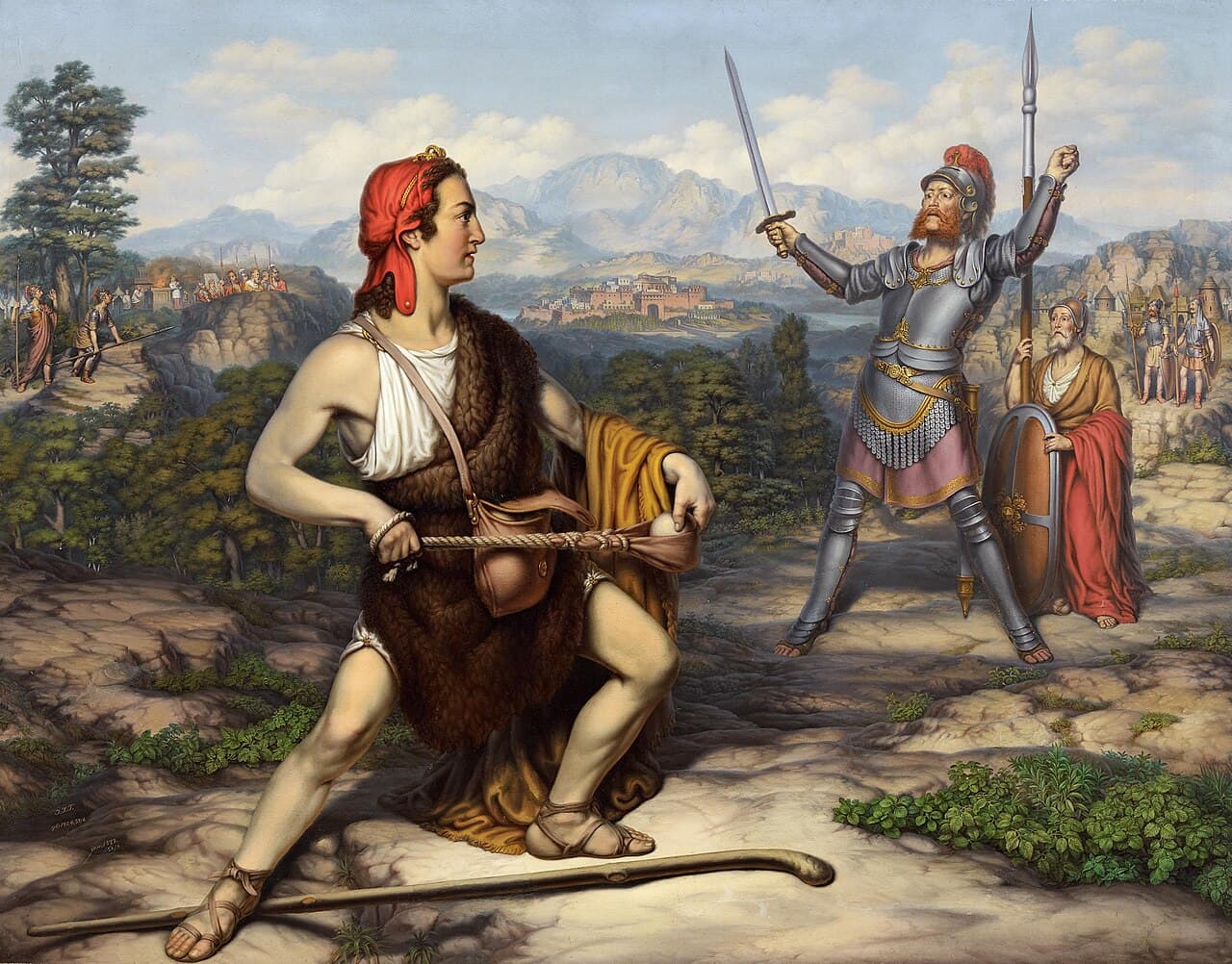
J. J. Trube, David und Goliath.
Has David toppled Goliath?
The opinion of most AI researchers is that lag behind the most capable models by an average of 4-6 months. Following the release of Kimi K3 and, three days later, Qwen 3.8, we think it's fair to say that the gap has narrowed. This is our review of the two models and what these new releases mean for the industry.
Kimi K3
On the 16th of July 2026, Moonshot released Kimi K3, 371 days after the release of Kimi K2, a model that impressed the community with its ability to generate decently sufficient code at a low price point. We at Closp also enjoyed Kimi K2; it was a cheap alternative to Anthropic's models that you could plug into Claude Code. As the year progressed, Moonshot's presence became less and less known. They released Kimi K2.5, and although it enabled some nice models like Composer, it wasn't as impressive a step up as K2. But now Moonshot seems to have done it again and awed the community, this time with a much more impressive model that, in some domains, seems to beat out even the top dogs over in the US.
Kimi K3 is the first open-source model. It has vision capabilities and a 1-million-token . Served via the it has a throughput speed of . Pricing is $0.30/ for , $3.00/MTok for , and $15.00/MTok for output.
Although its overall performance still trails that of the most powerful (see below results), it is definitely a frontier model: the first open frontier model.
Intelligence Index
Artificial Analysis Intelligence Index
Scores as of July 17, 2026
Fable 5
with fallback · Anthropic
$2.75 per task
Score
60
Sol
GPT-5.6 · max · OpenAI
$1.04 per task
Score
59
Sol
GPT-5.6 · xhigh · OpenAI
$0.68 per task
Score
58
Kimi K3
Open-weight · Moonshot AI
$0.95 per task
Score
57
In some areas Kimi K3 even beats out the top closed models. The two most notable areas are browser usage and web development. Its web-development performance is evident from the scores on Arena AI: Kimi K3 is the top model in the Web Development section. Its strong browser performance is demonstrated by its BrowseComp scores.
Web Development
Arena AI ranking
Scores as of July 19, 2026
kimi-k3
Moonshot
Score
1679
claude-fable-5
Anthropic
Score
1631
gpt-5.6-sol-xhigh
OpenAI
Score
1618
BrowseComp
Web browsing benchmark · Higher is better
Scores as of July 19, 2026
Kimi K3
Moonshot
Score
91.2
GPT-5.6 Sol
OpenAI
Score
90.4
Fable 5
Anthropic
Score
88.0
Browser usage is particularly interesting: think about all the work tasks that require you to access some interface in a browser. Having an that is able to navigate those interfaces is really useful for speeding up workflows and enabling agents to work more autonomously.
Furthermore, it shows some promising capabilities in 3D, which are fun but not very useful. Below is an example of a 3D Game Boy arcade emulator that the people over at Moonshot made using Kimi K3.
Moonshot's announcement also had a few examples that tried to hint that they are closer than the others to reaching some sort of snowball effect in AI development, where the models a lab develops lead to better and better models, since they can design chips, write , help with training and so on. This is a classic Anthropic playbook. Anthropic loves talking about how their models will eventually create more powerful models that in turn create even more powerful models, and on they go until is achieved. Announcements that hint at this effect should always be treated with a healthy amount of scepticism. But it is an interesting notion. In that vein, a few labs have started letting the models they are developing help with the later stages of development. Moonshot says that an early version of Kimi K3 handled most of the team’s kernel optimization during the later stages of development. OpenAI has made similar claims, saying that its models help diagnose failures, optimize training systems, run experiments and interpret results.
In summary, Kimi K3 is a good model; overall, it trails the top closed-source models but comes out on top in certain areas.
Qwen 3.8 Max preview
This review of Qwen 3.8 is going to be a bit different, and more touch and go than what you are used to from us. There won't be any token prices, TPS speeds or benchmark results. The model simply isn't fully out yet. It isn't available on the API, and the only way to access it is through Alibaba's. There are no official numbers on anything, and since it is only available via the token plan, benchmarkers haven't had the chance to test it.
All we have from Qwen is this tweet:

Qwen3.8 is launching and going open-weight soon!🌐 With a massive 2.4T parameters, this model is continuously evolving. We believe it’s one of the most powerful model available today, compatible to leading frontier AI models , second only to Fable 5. You don't have to wait to Show more

That's it in terms of official numbers. We know that it is a 2.4T-parameter model (smaller than Kimi K3) and that it is supposedly “second only to Fable 5.” in terms of capability.
So, due to the circumstances, we decided to conduct some of our own tests by pitting it against GPT 5.6 in two different coding tasks.
Test one: the LoRA speedrun
For the first test we gave both models the same job: bolt a adapter onto a small Qwen2.5 model and beat a speed-and-accuracy benchmark. The agents were given access to a Modal account and were instructed to not spend more than $15 on .
This is a challenge anyone can try. It’s called LoRA Speedrun. It has a public leaderboard, although we did not submit these results to that leaderboard.
The test had to run twice, since the first time around GPT peeked at Qwen's job.
On the rerun, Qwen read the instructions and got on with the task it had been given. It trained a valid adapter and ran it thrice: 61.0%, 60.0% and 60.6% against a 57% bar, at about 218 seconds a run. GPT, on the other hand, completely brushed over the instructions. You see, the GitHub page for the speedrun contains two different tracks. Both models were instructed to complete Track 1 and not Track 2. GPT completed Track 2.
So Qwen wins on disqualification. How very conclusive…
LoRA speedrun
GSM8K · Qwen2.5-1.5B + LoRA · one L40S GPU
$15 compute cap · run twice · July 20, 2026
Criterion
Qwen 3.8 Max
GPT 5.6 Sol
Read the instructions
Stayed on the assigned task
Produced a valid model
GSM8K accuracy (57% to pass)
60.6%
Tokens used
5.0M
18.0M
Test two: multi-agent orchestration
For the second test we gave both models a more “normal” coding task: build a production-ready dashboard that, once a day, would scrape the websites of every lunch restaurant within two kilometres, as the crow flies, of an address in Stockholm and display each one’s . (Shoutout to the IBM office in Malmö for the fun idea.) The distance had to be worked out from real coordinates. It had to be a , though they got to pick the themselves. We told both models to use , which made it possible for us to understand how good each model was at orchestrating a small team of agents. Both divided the work pretty well. Qwen spun up four workers in parallel; GPT delegated three narrower tracks and kept the core of the build for itself. Qwen did some stuff GPT didn’t. It spawned a review agent to check the work before calling it done, which caught a few bugs. And when one of its workers died mid-run on a quota error, the coordinator built the missing package itself.
The token counts came out near-identical: about 36.6 million for Qwen and 34.2 million for GPT. But Qwen came back with more to show for it. It managed to get ten restaurants with working scrapers compared to GPT’s two. GPT was much more dishonest about its work. It declared its dashboard production-ready when only two of eighteen restaurants were automated, and only walked that back once we pushed. We also think Qwen produced a much nicer design. Qwen’s version had a map, filters and a dashboard layout. By contrast, GPT’s design looked more like a menu than a dashboard. This was another failure, given that the brief specifically called for a dashboard.
Screencaps of both finished dashboards are below.
Qwen 3.8 Max
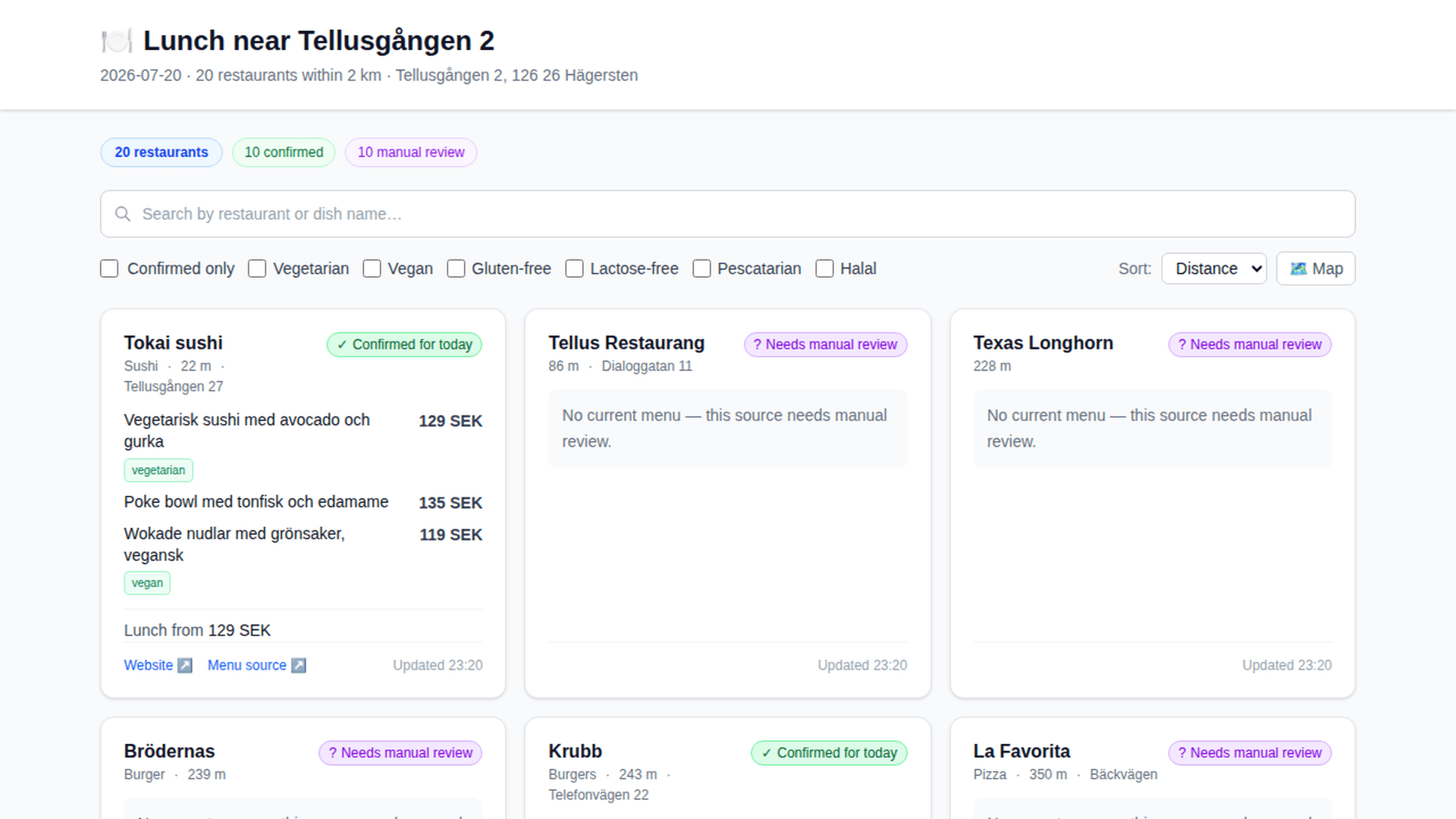
Front page
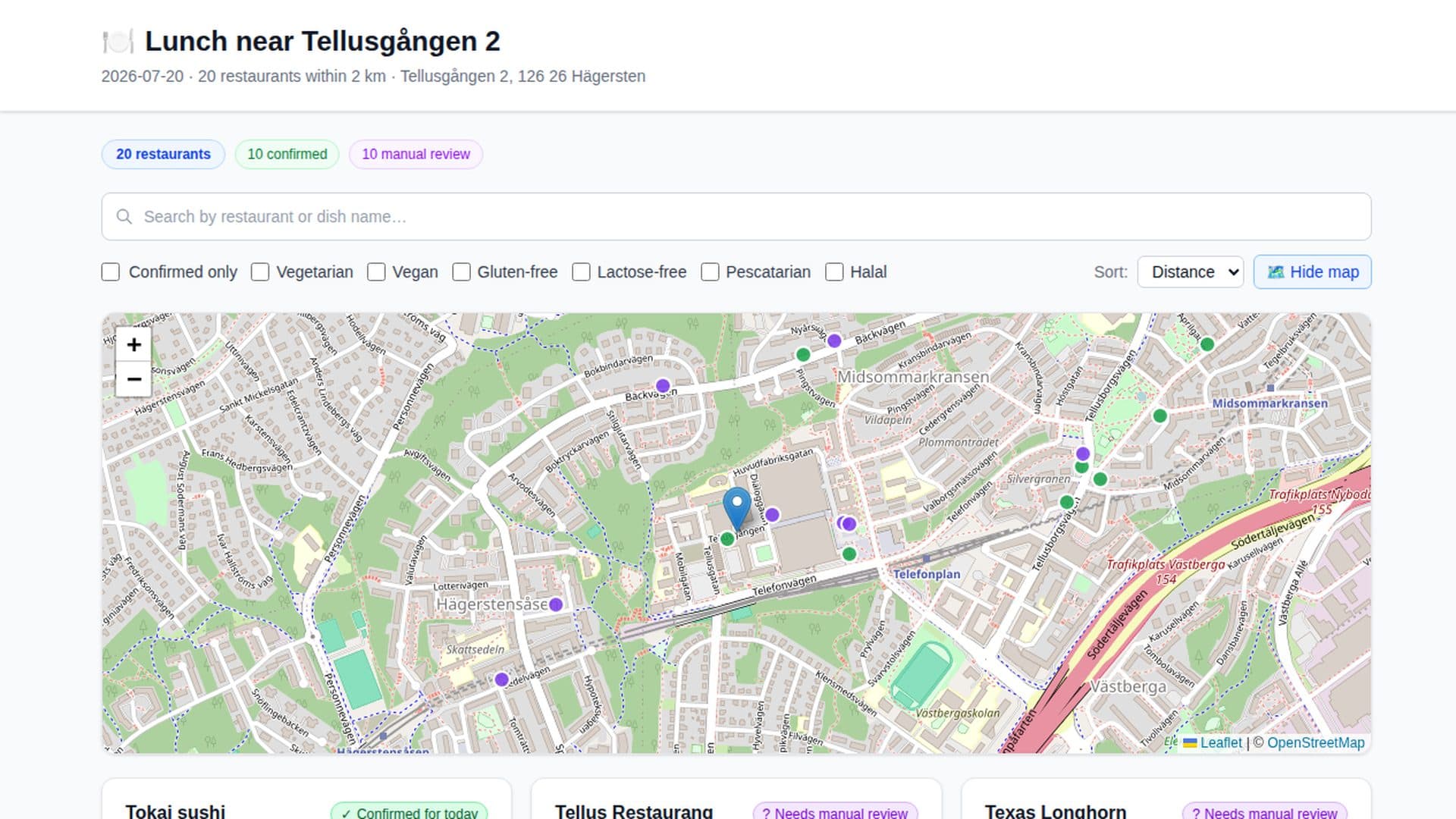
Map view
GPT 5.6
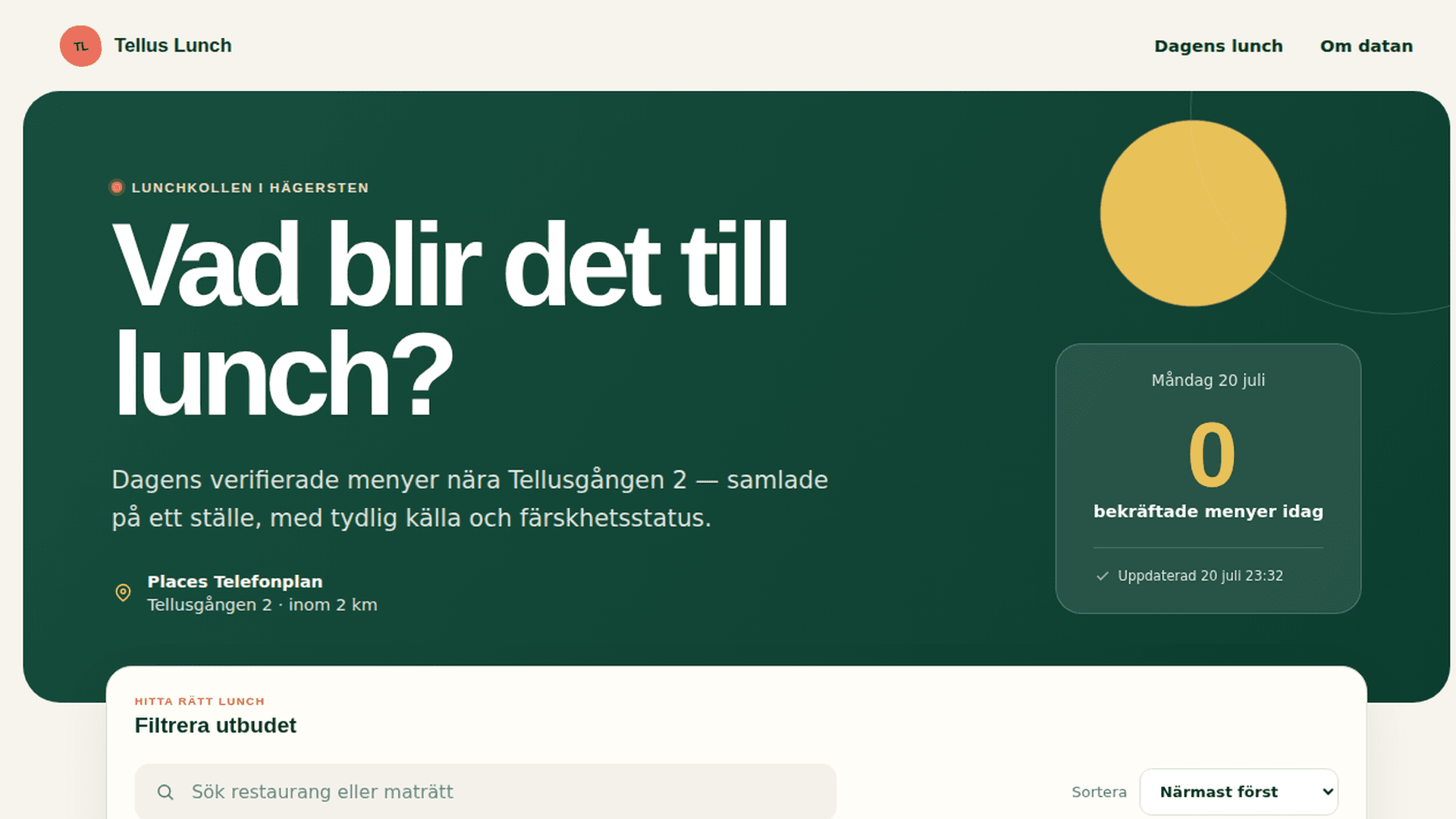
Front page
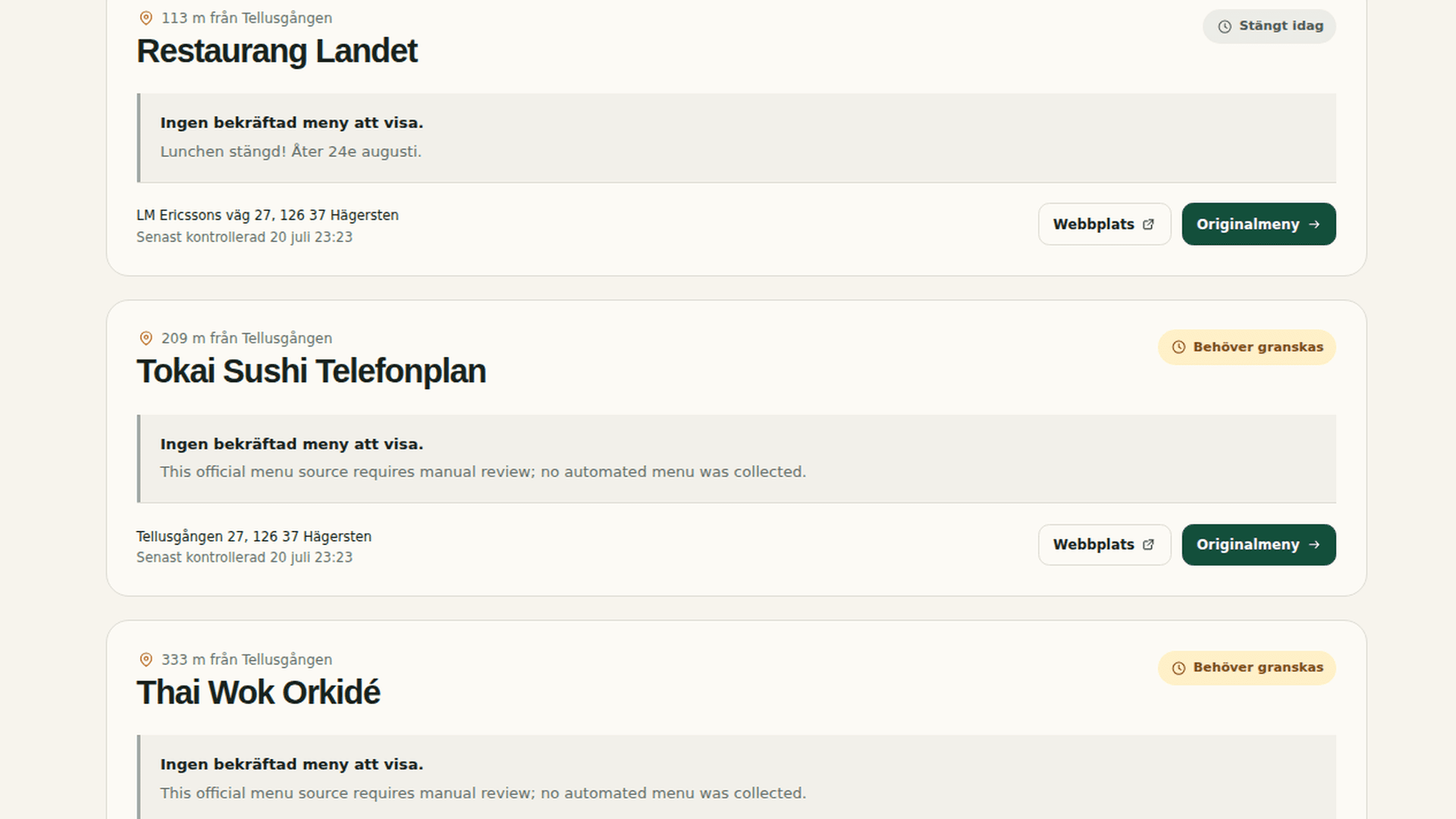
Below the fold
Takeaway from tests
Okay, these tests are obviously not conclusive. They are closer to an anecdote than a rigorous test or benchmark. Furthermore, the tests also focused mostly on coding, not the many other tasks people use AI for. GPT 5.6 seemed to be in an extra pitbull-esque mood during these two tests, which made its performance quite lacklustre and therefore harder to compare fairly. But with that said, it was entertaining to see Qwen work and we think it did a good job. It feels fast and has a way of tackling problems that feels much more mature compared with how Sol performed. In that sense, it’s much more akin to what you’d expect from Fable. Wise rather than wild. We think this will be a pretty good model once it’s fully released. As for the claim that it’s “second only to Fable 5”: sure, it might just be.
Verdict
applies. We think it’s safe to say that “the open labs” have not toppled the closed ones. What the narrowing gap means is a much bigger subject than we can cover here. The and will have to wait for separate notes. Here we want to focus on what it means for you as a user and customer.
The closer open models get to the frontier, the less AI depends on a handful of companies deciding what access should cost and how their models may be used. More capable choices force every lab to compete harder on price, speed and quality, which is plainly good for customers. They also let companies use a smaller or specialised model when that is enough, instead of paying frontier prices for every single task. Because the weights can be run and adapted elsewhere, users have more control over their data, their infrastructure and the knowledge they build on top of a model. Openness is not automatically safe, but it does allow more researchers to inspect failures, test safeguards and find problems that a closed provider may miss. The best version of the AI industry is therefore not one with a single winner, but one where useful models are plentiful, competition remains fierce and switching providers is possible.
May the gap continue to narrow.
